Individual therapy is a form of therapy in which a client meets on a one-on-one basis with a therapist. Usually, therapy sessions are weekly, biweekly or twice weekly depending on the severity of the client’s issues. The sessions are 55 minutes to an hour long. Intake session is 90 minutes which include psychosocial assessment and mental health and risk assessments screenings.
COUPLES THERAPY
Couples therapy is a type of psychotherapy in which a therapist with clinical expertise and knowledge works with couples to gain insight into their relationship, invite them to talk about their conflicts and improve relationship satisfaction by utilizing a variety of therapeutic interventions.
FAMILY THERAPY
Family therapy is a type of psychotherapy that helps family members improve communication and resolve their conflicts. Family therapy can be beneficial in stress, grief, anger or conflict. It can help family members understand one another better and offer tools and teach coping skills to bring them closer together.
TRAUMA THERAPY
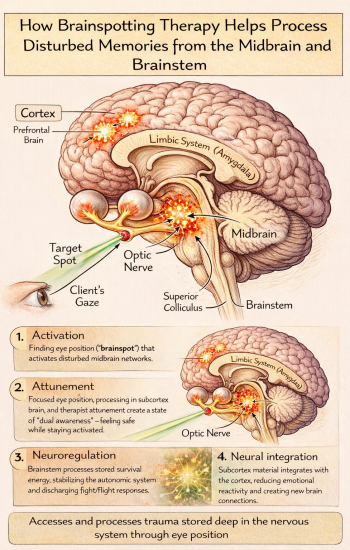
I offer Brainspotting therapy to help individuals process unresolved trauma, reduce anxiety, and gain emotional clarity. This brain-based approach is especially helpful for those who have tried traditional talk therapy but continue to feel stuck. Brainspotting works directly with the nervous system, allowing the brain’s natural healing capacity to activate beyond conscious thought.
What is Brainspotting?
Brainspotting (BSP) is a neuroscience-informed therapy developed by Dr. David Grand in 2003 and is based on the principle that “where you look affects how you feel.” During sessions, a specific eye position, called a brainspot, is identified and used to access and process unprocessed emotional material stored in deeper areas of the brain. Unlike talk therapy, which primarily engages the thinking mind, Brainspotting accesses the subcortical brain where trauma and survival responses are stored. Clients often experience deeper processing with less need to verbalize painful experiences. This body-based approach supports emotional regulation, faster breakthroughs, and lasting change. Brainspotting can help with trauma and PTSD, anxiety, depression, grief, chronic pain, performance anxiety, addiction, emotional disconnection, and relationship concerns. It can be integrated into a broader treatment plan and tailored to each client’s pace and goals. Brainspotting works directly with the nervous system, allowing the brain’s natural healing capacity to activate beyond conscious thought.
Brainspotting is effective in addressing a wide range of concerns, including: